





On July 2, netnut.com stopped serving a dashboard and started serving an FBI seizure banner. If you had a cron job pointed at their gateway, you found out the same way I did: a wall of connection errors at 3am and a Slack thread full of question marks.
Then the follow-up sank in. Google's Threat Intelligence Group said it has high confidence that many popular residential proxy brands were quietly white-labeling the same network. So a lot of people who never bought from NetNut were also, technically, buying from NetNut.
Full disclosure, up front and in bold: I work for Roundproxies, and I put us at number one. You should read that with exactly as much suspicion as it deserves. Every claim I make about our own product below is a number you can check on our pricing page, and I've listed our weaknesses in the same detail as everyone else's. Then go get a second opinion from Proxyway or Krebs before you wire anyone money.
I've been buying proxy bandwidth for scraping infrastructure since 2018, and I've spent the last three weeks moving production traffic off a dead gateway. These are the 6 NetNut alternatives I'd actually put a crawler behind, plus a script for checking whether your "new" provider is just the old one wearing a hat.
The best NetNut alternatives
- Roundproxies for replacing NetNut's ISP proxies
- Decodo for the fastest drop-in swap
- Oxylabs for teams that need compliance paperwork
- Bright Data for the hardest targets and the widest geo coverage
- IPRoyal for bursty crawls where bandwidth shouldn't expire
- Evomi for solo devs and small teams on a tight budget
What actually happened to NetNut
Short version: the FBI and IRS Criminal Investigation seized hundreds of domains tied to NetNut, including netnut.com, proxyjet.io, and divinetworks.com - the last of which supplied its ISP proxies through direct contracts with internet providers. netnut.io and alarum.io followed a few days later.
The reason was the Popa botnet. Google, Lumen, Spur, Synthient, and Nokia Deepfield all landed on the same conclusion: NetNut's residential pool ran on roughly 2 million consumer devices, mostly smart TVs and streaming boxes, enrolled through SDKs bundled into apps.
Google counted 316 distinct threat clusters routing through those exits in a single week of June.
Parent company Alarum Technologies (NASDAQ: ALAR) told Krebs it was cooperating with investigators. Its stock fell about 67% in a week. It later disclosed the disruption was likely to have a material adverse effect on operations, and paused traffic through affected services.
Here's the part that should change how you shop. NetNut ran a reseller program, and Google's read is that plenty of "independent" proxy brands were reselling that pool under their own logo.
So if your provider's residential success rate fell off a cliff after July 2, you may have been a NetNut customer without knowing it.
What makes a good NetNut replacement
I evaluated on five things, in this order.
How We Pick and Test What We Recommend
Every roundup you see on Roundproxies is put together by real people who live and breathe proxies, tools, and software. We don't just skim the surface, we roll up our sleeves and spend serious time digging into each product, putting it through real-world use, and measuring it against clear standards that actually matter for the category. No shortcuts, no guesswork. For more information on how we chose software, apps and tools, feel free to read the full article of how we pick the tools we recommend on Roundproxies blog.
Every roundup you see on Roundproxies is put together by real people who live and breathe proxies, tools, and software. We don't just skim the surface, we roll up our sleeves and spend serious time digging into each product, putting it through real-world use, and measuring it against clear standards that actually matter for the category. No shortcuts, no guesswork. For more information on how we chose software, apps and tools, feel free to read the full article of how we pick the tools we recommend on Roundproxies blog.
Documented IP sourcing. Not a marketing page that says "ethically sourced." I want a named acquisition channel - an SDK with disclosed opt-in, a paid bandwidth-sharing app, direct ISP contracts - plus a certification someone else audits, like EWDCI, ISO 27001, or SOC 2. If a provider can't tell you where the IPs come from, it's because it doesn't own them.
First-party network, not resale. Resale isn't evil on its own; it's normal in this industry. But a reseller literally cannot answer sourcing questions, and it inherits every takedown that hits its upstream. That's the exact failure mode we just watched play out twice in six months.
Static ISP proxies as a real product. NetNut's whole pitch was one-hop ISP connectivity. If you were using it for long sessions or account work, a rotating residential pool is not a swap - you need ISP proxies with dedicated IPs.
Pricing that survives contact with reality. Published per-GB rates at every tier, no mandatory sales call, and clear rules on whether unused traffic expires. Expiring bandwidth quietly inflates your real cost per GB.
Self-serve access. You're migrating under time pressure. A provider that takes three days to approve you is a genuine cost right now, even when the gate exists for good reasons.
What I left out: managed scraping APIs. This site's position is that you build and control your own scraper, and swapping a seized proxy vendor for a black-box API that decides what you're allowed to fetch is not an upgrade. I also skipped any provider I couldn't find a first-party sourcing statement for.
Testing process: I ran each provider's rotating endpoint for 200 requests against a control target, sampled exit IPs, checked pool overlap between providers using the script further down, and pointed a small production crawl at each for several days.
NetNut alternatives at a glance
| Provider | Best for | Standout feature | Pricing |
|---|---|---|---|
| Roundproxies | Replacing ISP proxies | Static ISP IPs at $1.00–$1.40/IP, unlimited bandwidth | ISP from $1.00/IP; residential from $3.50/GB |
| Decodo | Fastest drop-in swap | Single endpoint, good docs, instant signup | From $3.75/GB (3 GB), $2/GB at 1 TB |
| Oxylabs | Compliance paperwork | 175M+ IPs, SOC 2, one backconnect gateway | From $6/GB (5 GB), ~$2.50/GB at 1 TB |
| Bright Data | Hardest targets | Widest geo and ASN targeting, public trust center | From ~$8/GB PAYG, lower on volume |
| IPRoyal | Bursty crawls | Purchased traffic never expires | $7/GB at 1 GB, $1.75/GB at bulk |
| Evomi | Small budgets | EWDCI-certified at the lowest published rate | $0.49/GB on the 100 GB plan |
The 6 best NetNut alternatives, reviewed
Best NetNut alternative for ISP proxies: Roundproxies
Pros
- Static ISP IPs from $1.00–$1.40/IP with unlimited bandwidth
- Never-rotating dedicated IPs across 50+ ISP providers
- Signup to credentials with no card and no sales call
Cons
- No published third-party sourcing certification - the thing I told you to demand
- Success-rate and pool figures are self-reported, with no independent audit
- Residential headline rate is a discounted price, not the list price
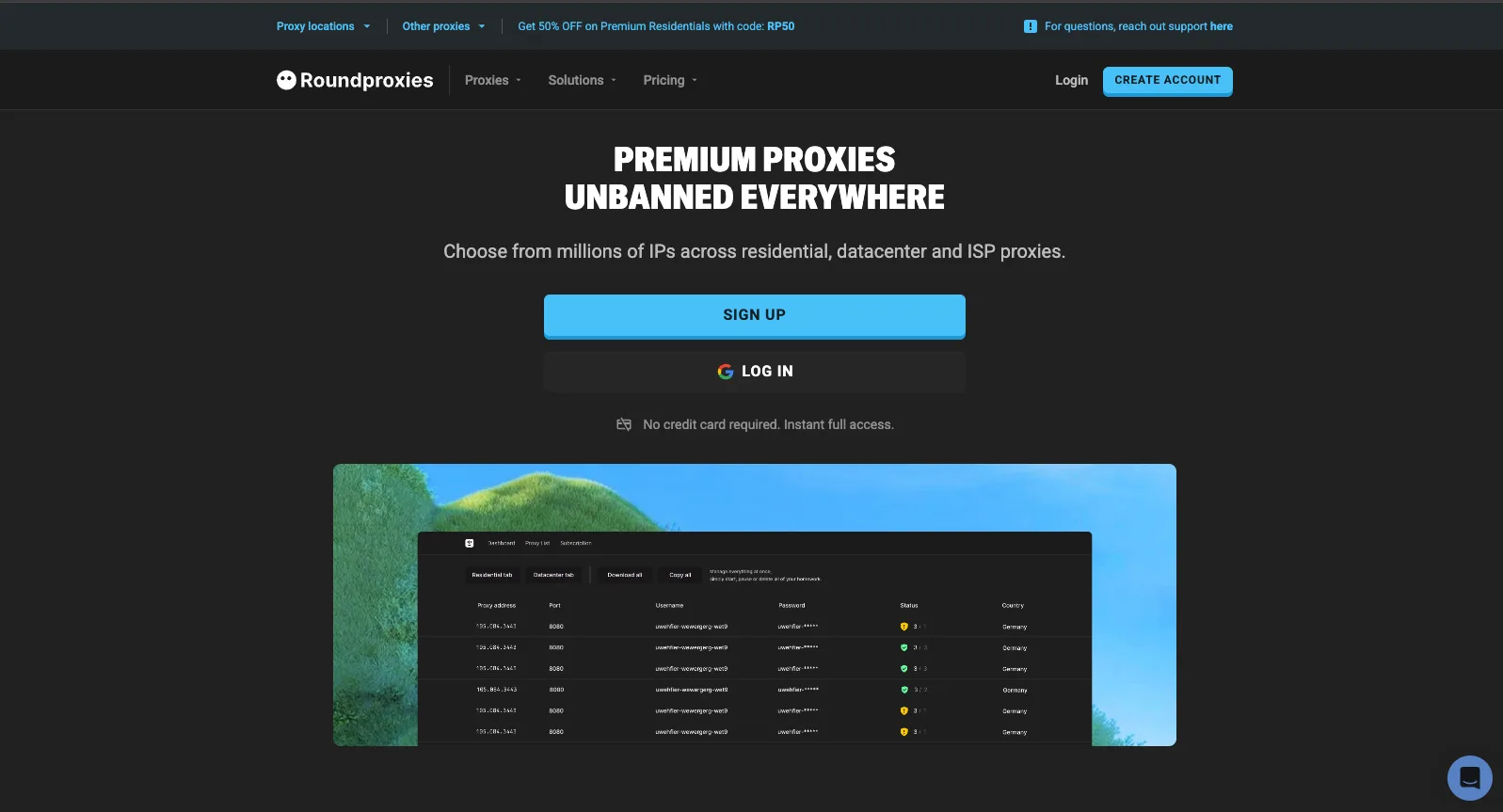
Yes, this is our product. Here's the specific reason it's first rather than sixth, and you can check it in about ninety seconds.
The part of NetNut nobody talks about is what got seized alongside it: divinetworks.com, the supplier behind its ISP proxies, sourced through direct contracts with internet providers. If you were running long sessions or account work on NetNut's static IPs, a rotating residential pool is not a replacement. You need dedicated ISP IPs that don't move.
That's the narrowest market on this list and the one where the price gap is widest. Our ISP plans run $14 for 10 IPs down to $300 for 300 - roughly $1.00 to $1.40 per IP per month, unlimited bandwidth, never rotating. Decodo's comparable static residential starts around $2.50–$3.33/IP and IPRoyal's around $2.40. On a 100-IP footprint that's the difference between $125 and $250–330 a month for the same shape of product.
Residential exists too: 119M+ IPs, 195+ countries, city-level targeting, from $3.50/GB with the current 50% code. That's mid-market pricing, not a differentiator, and I'm not going to pretend otherwise.
Now the honest part, and it's the same test I applied to everyone else. Our public pages say "ethically sourced" without naming an acquisition channel or a third-party certification, and Evomi and Bright Data both publish more than we do on that front. If sourcing documentation is your buying criterion - and after July it should be - email support and make us answer the three questions at the end of this article in writing before you commit real volume. If we can't, buy from someone who can. Our own pages also contradict each other on sticky session length (24 hours in one place, 30 minutes in the FAQ), which is the kind of thing that should make you test rather than trust.
Who it's still right for: teams replacing NetNut's static ISP footprint who want dedicated IPs at half the going per-IP rate, and who'll verify the pool themselves rather than take a marketing page's word for it.
Roundproxies pricing: ISP proxies from $14/month for 10 IPs, down to $1.00/IP at 300. Residential from $3.50/GB with the RP50 code ($7/GB list), dropping to about $1.58/GB at 1 TB. Datacenter from $0.60/IP down to $0.30/IP. Free trial on ISP and datacenter, no card required.
Best NetNut alternative for a fast swap: Decodo
Pros
- Signup to first request in under ten minutes
- Published per-GB pricing at every tier
- Residential, ISP, datacenter, and mobile under one login
Cons
- Pool is mid-sized next to the tier-1 vendors
- Their own pricing page contradicts itself on pay-as-you-go rates
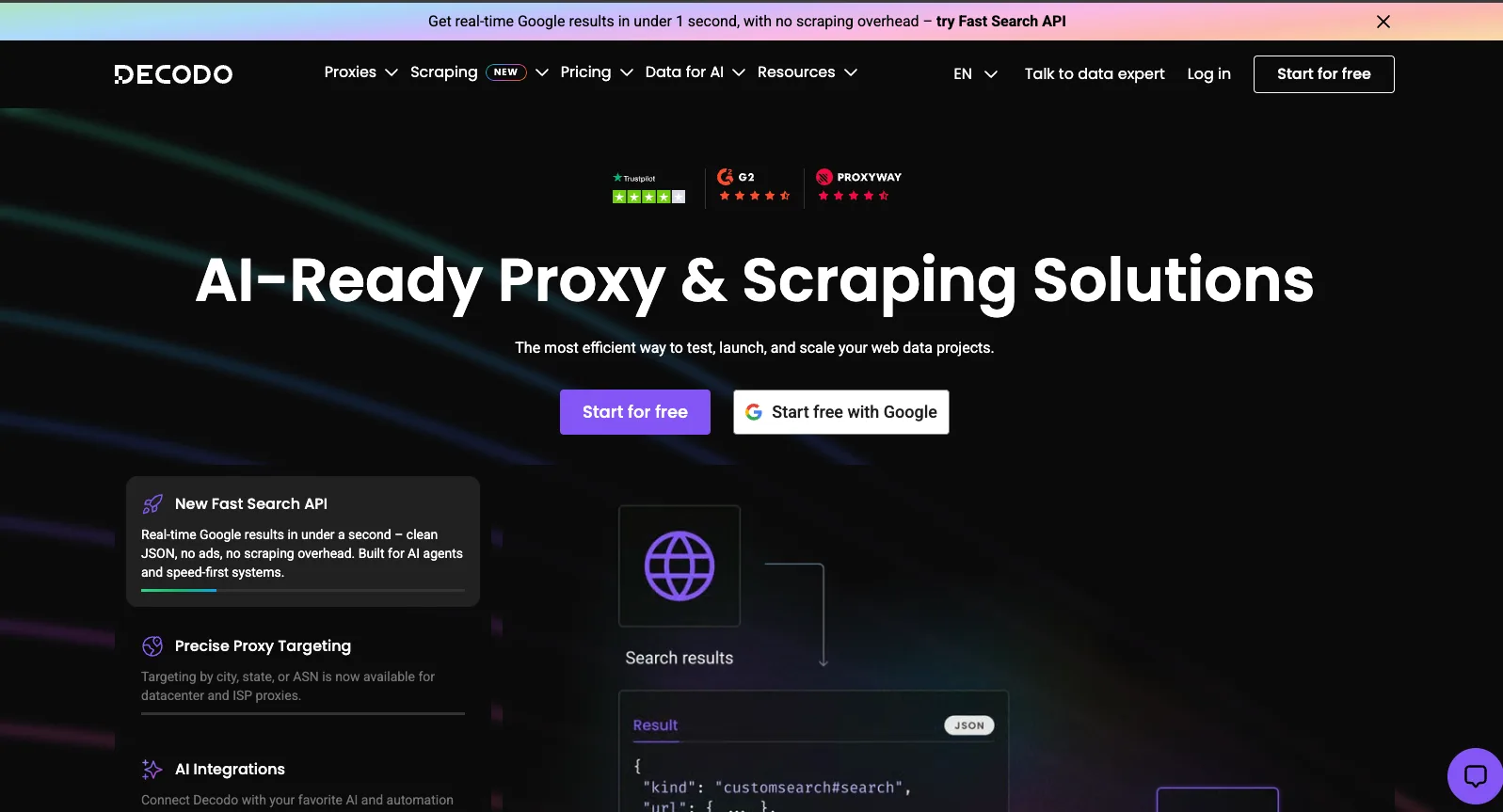
Decodo (formerly Smartproxy) is the closest thing to a like-for-like replacement if you were on NetNut's mid-market tiers. 115M+ residential IPs, 195+ locations, targeting down to city, ZIP, and ASN, and an endpoint format that took me about four lines of diff to swap in.
The reason it's my default recommendation is boring and important: nothing about onboarding requires a human. No sales call, no video verification, no waiting. When your crawlers are down, "boring and immediate" beats "excellent in three business days."
The ISP product matters too, since that's what most NetNut refugees actually lost. Decodo sells static residential per IP rather than per GB, starting around $3.33/IP/month for small counts and dropping to about $2.50/IP at 200.
That said, one thing genuinely annoyed me. The residential pricing grid lists pay-as-you-go at $4/GB, while the wallet FAQ on the same page quotes a much higher number for a single gigabyte. Check the figure at checkout, not on the marketing page. It's still the right pick for most teams under a terabyte a month - you just shouldn't trust the sticker.
Decodo pricing: From $3.75/GB on the 3 GB plan, stepping down to $2/GB at 1,000 GB. ISP proxies from $3.33/IP/month. 3-day trial available.
Best NetNut alternative for compliance: Oxylabs
Pros
- 175M+ residential IPs across 195 countries
- SOC 2 and ISO documentation your legal team can actually read
- Single backconnect endpoint, no zone configuration
Cons
- Entry pricing is uncompetitive under about 20 GB/month
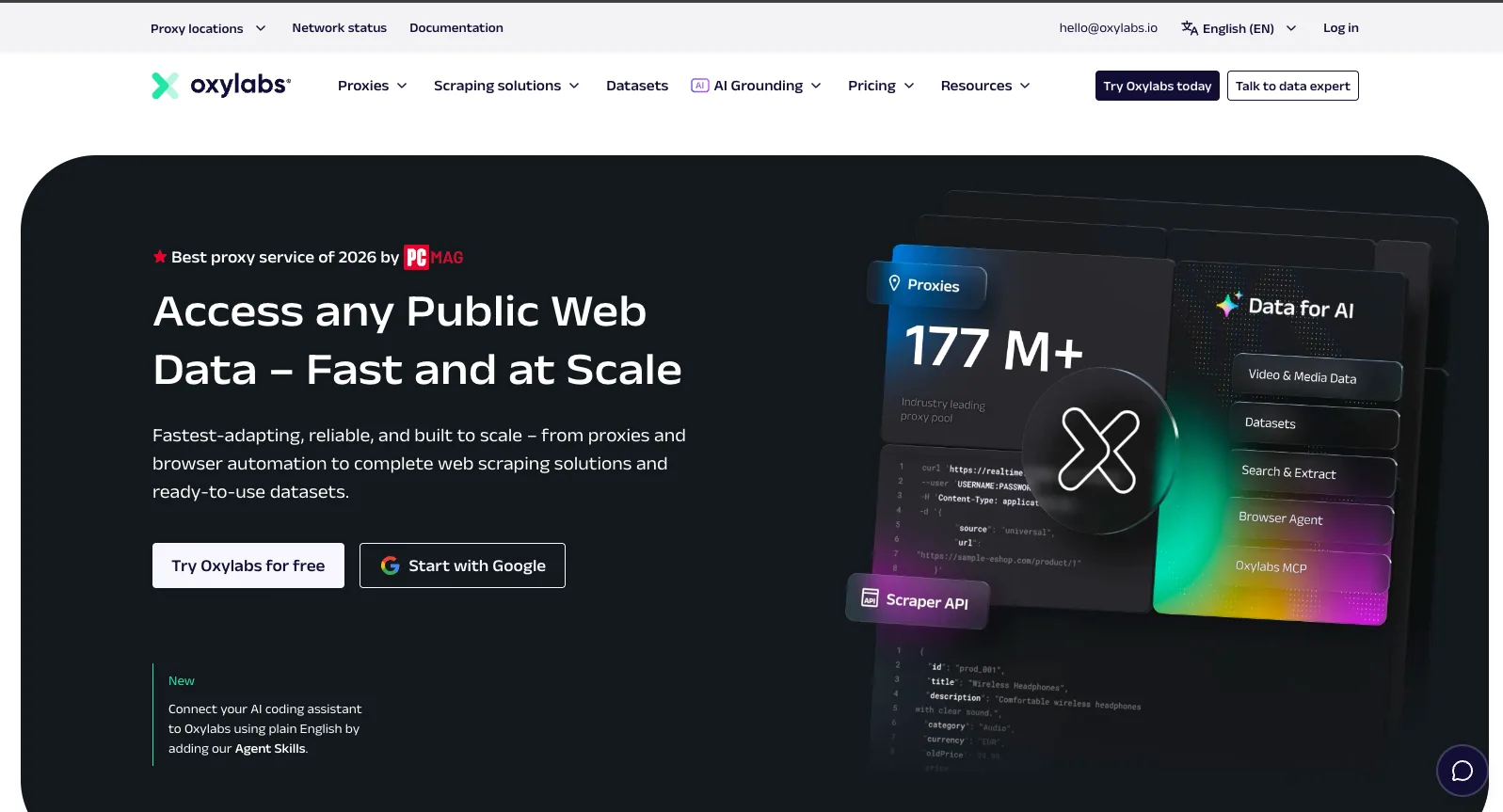
If someone in procurement is now asking where your proxy IPs come from - and after July, someone will - Oxylabs is the least painful conversation. It sources primarily through Honeygain, a bandwidth-sharing program that's been running publicly for years, and publishes compliance documentation without a sales call attached.
Architecturally it's the simplest of the big three. One backconnect gateway, credentials in the username string, geo targeting as parameters. Coming off NetNut's gateway model, this is the smallest mental shift on the list.
The catch is the entry tier. $6/GB on the 5 GB Starter plan is real money for a small crawl, and the curve only rewards you from about 100 GB up, bottoming out near $2.50/GB at 1 TB.
Below 20 GB a month you're paying enterprise rates for a hobby workload. But if you're committing to volume anyway and someone has to sign off on sourcing, this is where I'd send the paperwork.
Oxylabs pricing: From $6/GB on the 5 GB Starter plan, down to roughly $2.50/GB on the 1 TB Corporate plan.
Best NetNut alternative for hard targets: Bright Data
Pros
- Largest published pool and the deepest geo/ASN targeting
- Public trust center, PwC assurance, EWDCI certification
- Open-source Proxy Manager you can self-host
Cons
- Residential access now requires human-reviewed KYC, and freelancers get rejected
- List pricing is the highest here
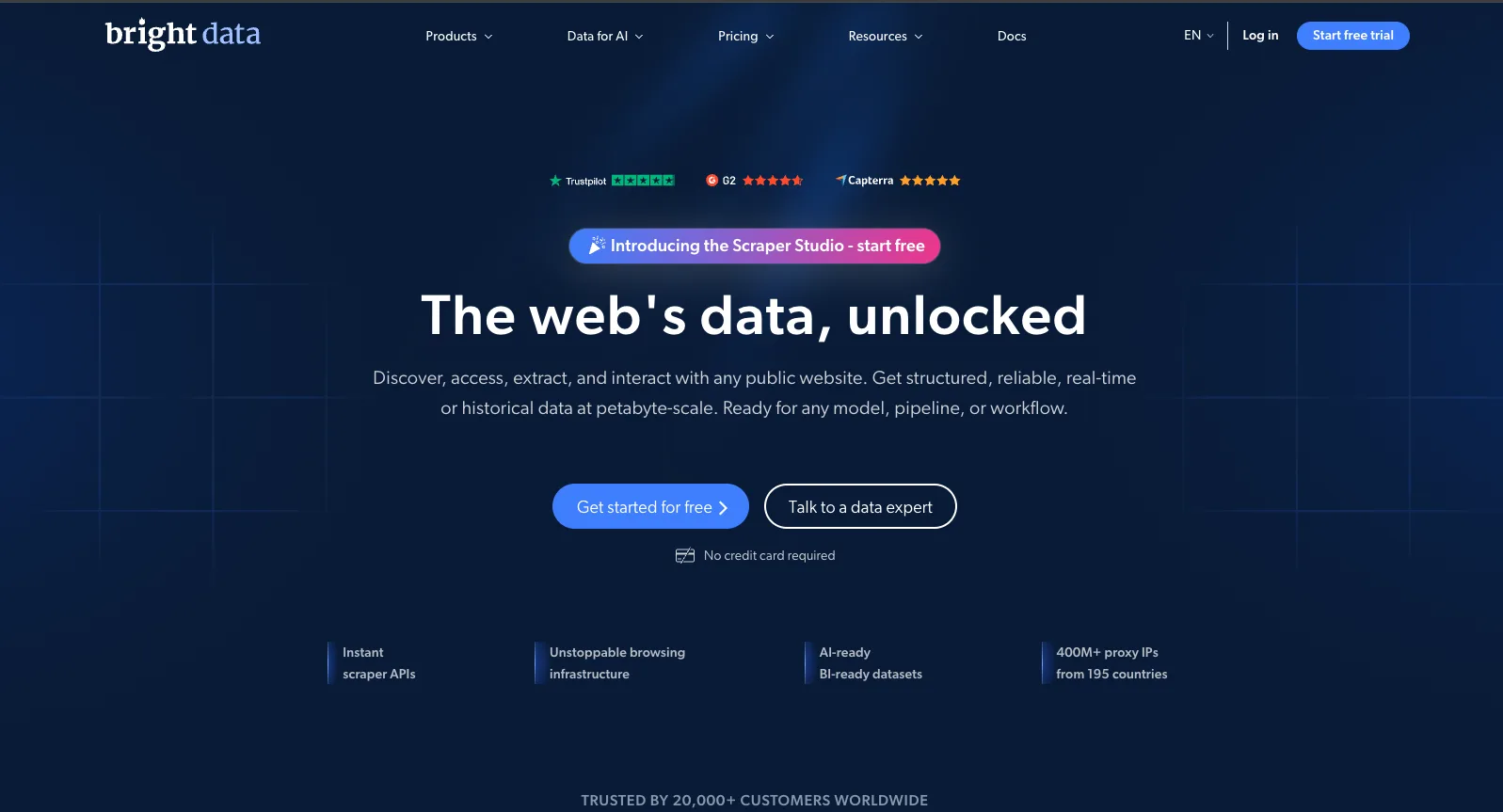
When a target's anti-bot stack is checking IP reputation at the ASN level, pool depth stops being a vanity metric. Bright Data has the widest coverage on this list and the most granular targeting, and if you're crawling something that fights back, that's the difference between a 40% and a 90% success rate.
It's also the provider that reacted hardest to the current climate. As of July 7, 2026, new residential zones require a human-reviewed KYC check - registered company, corporate email domain, no Gmail, no instant access. Existing zones kept working. When I went through the process the questions were specific: what are you scraping, at what volume, for what business reason.
Be warned, though: that gate is real, and it rejects a meaningful share of solo applicants. Datacenter and ISP proxies stay self-serve, so a one-person shop can still use the network - just not the residential pool.
If you're a funded company scraping hardened e-commerce or ad targets, the paperwork is worth it. If you're a freelancer with a Gmail address and a deadline, skip to Decodo or Evomi.
Bright Data pricing: Around $8/GB list on pay-as-you-go, with volume tiers and promotional rates well below that. Datacenter and ISP sold separately.
Best NetNut alternative for bursty crawls: IPRoyal
Pros
- Purchased traffic never expires
- No monthly commitment, no sales gate
- ISP proxies from about $2.40/IP/month
Cons
- Small pool (32M+) and thinner published sourcing detail
- Entry per-GB rate is one of the highest before volume kicks in
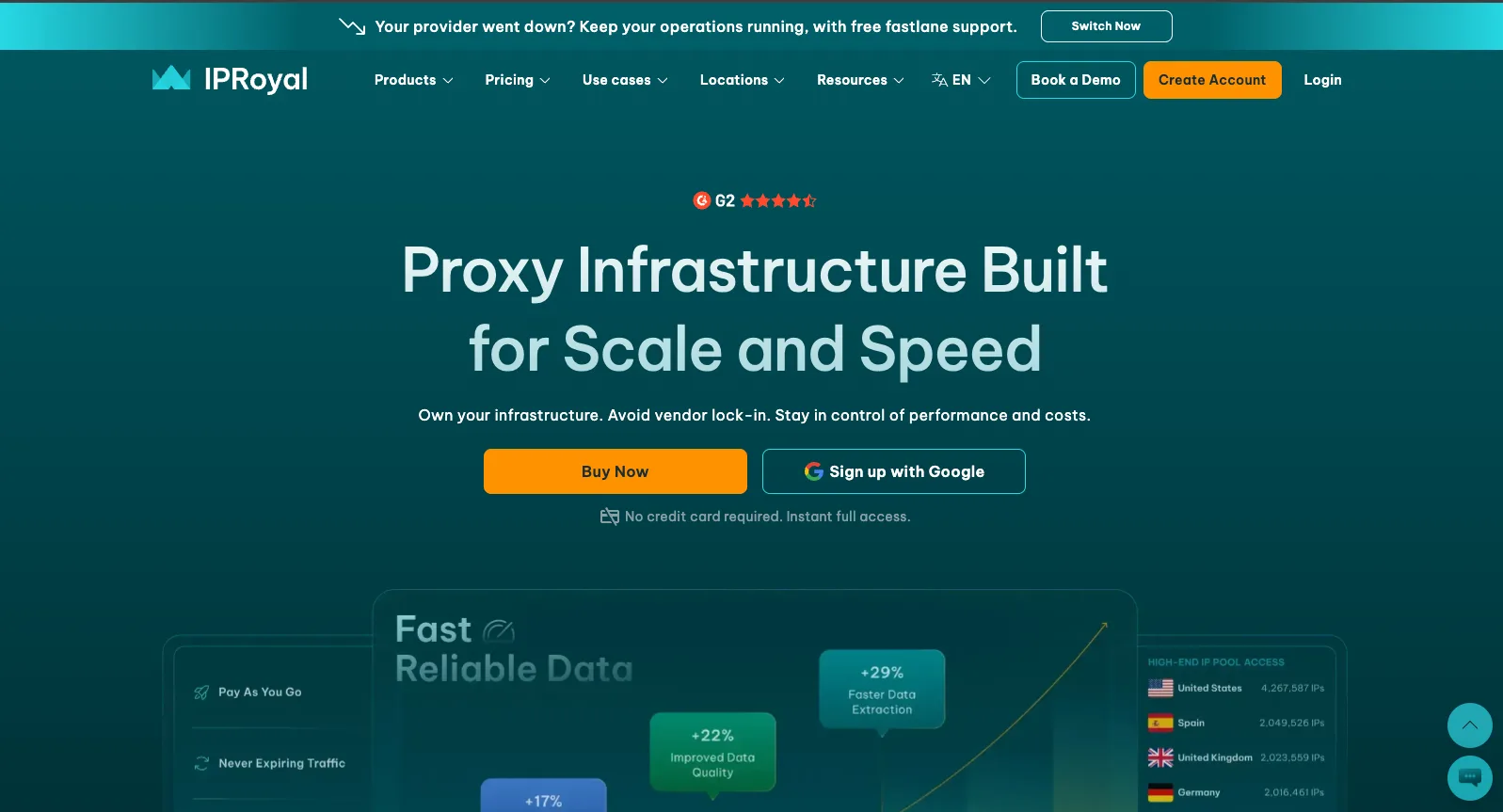
Most proxy billing assumes your crawl calendar is a metronome. Mine looks more like a heartbeat monitor - quiet for three weeks, then a quarterly catalog refresh that eats 80 GB in two days. IPRoyal is built for that shape: buy bandwidth, use it whenever, it doesn't evaporate at month end.
Sourcing is through Pawns.app, where people install software and get paid roughly $0.20/GB for their bandwidth. That's disclosed, consent-based, and a completely different model from a hidden SDK in a streaming box.
It's also worth sitting with the awkward part. Google's consumer advice in the takedown post is to be wary of any app offering payment for unused bandwidth.
Consent-based paid sharing is the legitimate version of that model, and it's still the model regulators are circling. That doesn't make IPRoyal a bad buy. It does make "which app, and what does it tell users?" worth asking before you scale spend.
The other honest limitation is depth: 32M+ IPs is small, and success rates against Cloudflare and Akamai trail the leaders. For mid-difficulty targets and irregular workloads it's the best value here.
IPRoyal pricing: $7/GB at 1 GB, around $4.90/GB at 50 GB, down to $1.75/GB at bulk tiers. ISP from about $2.40/IP/month. Traffic doesn't expire.
Best NetNut alternative on a budget: Evomi
Pros
- $0.49/GB on the 100 GB plan, the lowest published credible rate
- EWDCI-certified, ISO 27001/27701, Swiss-based
- Free trial with no credit card
Cons
- Younger company with no independently audited performance numbers
- Struggles on aggressive targets like Amazon and LinkedIn at scale
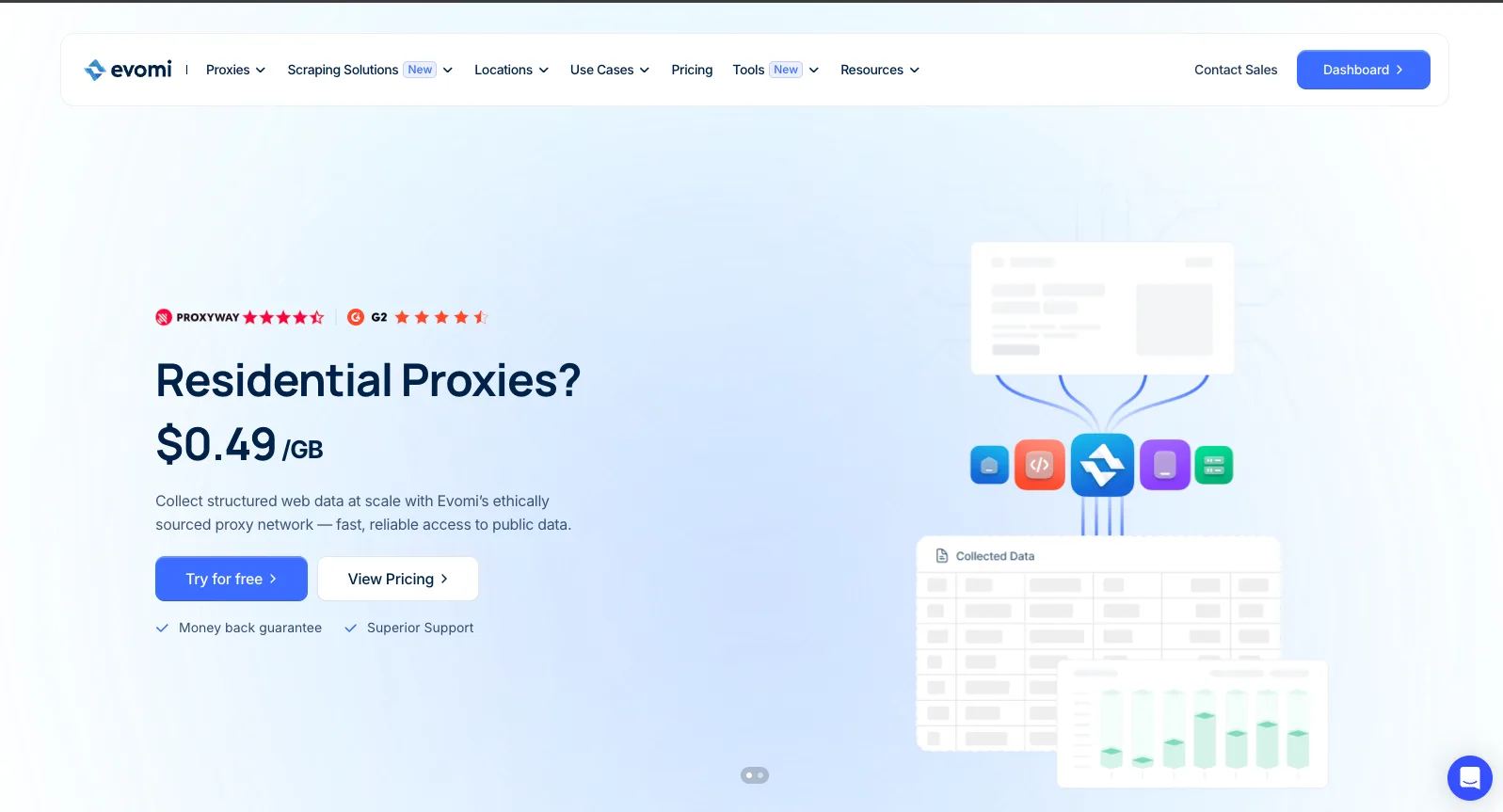
Evomi is the one provider here where the price looks like a typo. $0.49/GB on the 100 GB plan - $49.99/month - against an industry that mostly lives between $3 and $8. My first assumption was relabeled datacenter IPs. As far as I can tell, it isn't: Evomi is EWDCI-certified, holds ISO 27001 and 27701, and works with certified upstream suppliers rather than assembling its own botnet.
For scraping news sites, docs, product catalogs, and anything that isn't running a top-tier anti-bot stack, this is the best cost-per-successful-request on the list by a wide margin. Static residential starts around $1/IP and datacenter around $0.35/GB, so a mixed workload stays cheap.
One thing it won't do is carry your hardest targets. The pool is roughly 54M IPs, the company is young, and there are no audited third-party benchmarks to lean on.
Watch the small print too: the headline rate applies to the Core tier, and premium features multiply traffic consumption. If you're a solo dev with targets that aren't hostile, start here - the free trial costs an afternoon.
Evomi pricing: $0.49/GB on the 100 GB Core plan ($49.99/month); the 8 GB plan is $3.75/GB. Datacenter from $0.35/GB, static residential from $1/IP.
The option nobody sells you: your own datacenter pool
Here's the uncomfortable question nobody selling proxies wants to ask: does your target actually check? A large share of scraping traffic goes to sites with no bot defense worth the name, and paying residential rates for those requests is like renting a helicopter to cross the street.
Twenty VPS instances across a few providers, each with its own IP, costs somewhere around $60–120 a month total and gives you unmetered bandwidth. Put HAProxy or a small rotation layer in front, and you have a pool that no takedown can vanish overnight.
Buying datacenter IPs from any provider on this list lands in the same place for similar money, minus the server babysitting. The point isn't who you buy from - it's that you probably shouldn't be paying residential rates for these requests at all.
The limits are real and I won't sell you past them. Cloudflare's current models fingerprint TLS and browser behavior on top of IP reputation, and datacenter ASNs get scored badly before you send a byte. Against anything hardened, this fails.
Against internal tools, public data portals, and the long tail of unprotected sites, it's the cheapest reliable option there is - and the only one here where the infrastructure risk is entirely yours to manage.
Budget roughly $3–6 per month per VPS, or $0.30–$1.40 per IP if you buy datacenter or ISP addresses from a provider instead.
How to check whether you actually left NetNut
This is the part the vendor comparison pages skip, and it's the only test that matters right now. Google didn't publish a list of white-label brands. So you verify it yourself, by looking at exits.
Start by sampling exit IPs through the provider you're evaluating. Two hundred requests through a rotating endpoint costs a few megabytes and tells you more than any marketing page.
import requests
from collections import Counter

PROXY = "http://USER:[email protected]:7000"   # rotating endpoint
proxies = {"http": PROXY, "https": PROXY}

exits = Counter()
for _ in range(200):
    try:
        r = requests.get("https://api.ipify.org", proxies=proxies, timeout=15)
        exits[r.text.strip()] += 1
    except requests.RequestException:
        continue                                    # burned exits are normal
print(f"unique exits: {len(exits)} of {sum(exits.values())} requests")
open("provider_a.txt", "w").write("\n".join(exits))
Two things to watch. If unique exits comes back far below your request count, rotation is stickier than advertised. If it errors constantly, the pool is still absorbing the July disruption.
Now run the same script against a second provider, in the same target country, and compare. Independent networks should barely overlap.
def load(path):
    ips = {l.strip() for l in open(path) if l.strip()}
    return ips, {".".join(ip.split(".")[:3]) for ip in ips}

a_ips, a_24 = load("provider_a.txt")
b_ips, b_24 = load("provider_b.txt")

print("shared IPs:  ", len(a_ips & b_ips))
print("shared /24s: ", len(a_24 & b_24))

# ASN origin lookup, no API key needed
ip = next(iter(a_ips))
q = ".".join(reversed(ip.split("."))) + ".origin.asn.cymru.com"
print(q)   # dig +short TXT $q
Two separate networks sampling 200 exits each in one country should share close to zero IPs and only a handful of /24s. Double-digit shared IPs means you're paying two invoices for one upstream.
Feed that last query to dig +short TXT and you'll get the announcing ASN - which tells you whether those "residential" IPs are really announced by a hosting provider.
Three questions to ask sales before you commit, in writing:
- Do you own this network or resell it? If resold, name the upstream.
- How are IPs acquired - SDK, paid app, direct ISP contract - and what does the device owner see?
- What third party has audited that? EWDCI, ISO 27001, SOC 2, or a named assurance report.
A provider that owns its pool answers all three in one email. A reseller changes the subject.
Other NetNut alternatives to consider
- SOAX - mid-market rates around $3.60/GB with strong geo granularity
- DataImpulse - about $1/GB pay-as-you-go with non-expiring traffic
- Webshare - free tier and very cheap datacenter plans for low-volume work
- Massive - smaller network built around a consent-first sourcing story
Which NetNut alternative should you use?
If what you lost was NetNut's static ISP footprint, we're the cheapest like-for-like swap at $1.00–$1.40 per IP - and I've told you which questions to make us answer first.
If you just need rotating residential running again this week, use Decodo. Instant access, predictable pricing, and the migration is a credential swap.
If procurement or legal is now involved, go Oxylabs - or Bright Data if you're also fighting serious anti-bot systems and can clear the KYC gate.
If your usage is lumpy, IPRoyal's non-expiring bandwidth will save you more than any per-GB discount. If you're a solo dev, start with Evomi's free trial. And if you're honest with yourself that your targets don't inspect much, build the datacenter pool and stop paying residential rates.
Whatever you pick, run the overlap script before you scale spend. The lesson of the last six months isn't that NetNut was uniquely bad - it's that most buyers had no idea whose infrastructure they were sitting on.
Pick the provider that fits this quarter's workload and can prove where its IPs come from. You can always migrate again. Apparently we all can.
FAQ
Is NetNut gone for good?
The primary domains are under FBI control and Alarum has said the disruption materially affects its operations. Whether some service returns is a legal question nobody can answer yet. Don't plan infrastructure around it.
Was I doing something illegal by using NetNut?
Buying proxy bandwidth isn't a crime, and the enforcement action targeted the operators and the botnet, not customers. The practical risk is different: your traffic may have exited through devices whose owners never knowingly consented, which is a problem for your legal team and your data provenance story even if it never becomes a problem for you.
How do I know if my current provider was white-labeling NetNut?
Google didn't publish names. Look for a residential pool that shrank or destabilized right after July 2, then run the overlap test above against a provider you know is first-party. Ask your account manager the ownership question in writing.
Are ISP proxies safer than rotating residential?
Different risk, not less. ISP proxies come from direct contracts with internet providers, so there's no consumer-device consent question. NetNut sourced its through divinetworks.com, which was seized alongside the rest - so single-supplier dependency is still worth checking.
![Decodo vs. Bright Data: Which is the better provider? [2026]](https://roundproxies.com/blog/content/images/2026/10/decodo-vs-bright-data-1.png)
![IPRoyal vs. Webshare: Which provider is cheaper? [2026]](https://roundproxies.com/blog/content/images/2026/10/iproyal-vs-webshare-1.png)









![IPRoyal vs Oxylabs: Which provider is better? [2026]](https://cdn.roundproxies.com/blog-images/2026/02/iproyal-vs-oxylabs-1.webp)