
IP address lookup:
Find your IP geolocation
Enter the IP you want to look up
Your IP as an example
Loading your IP details...
What information
can an IP address reveal?
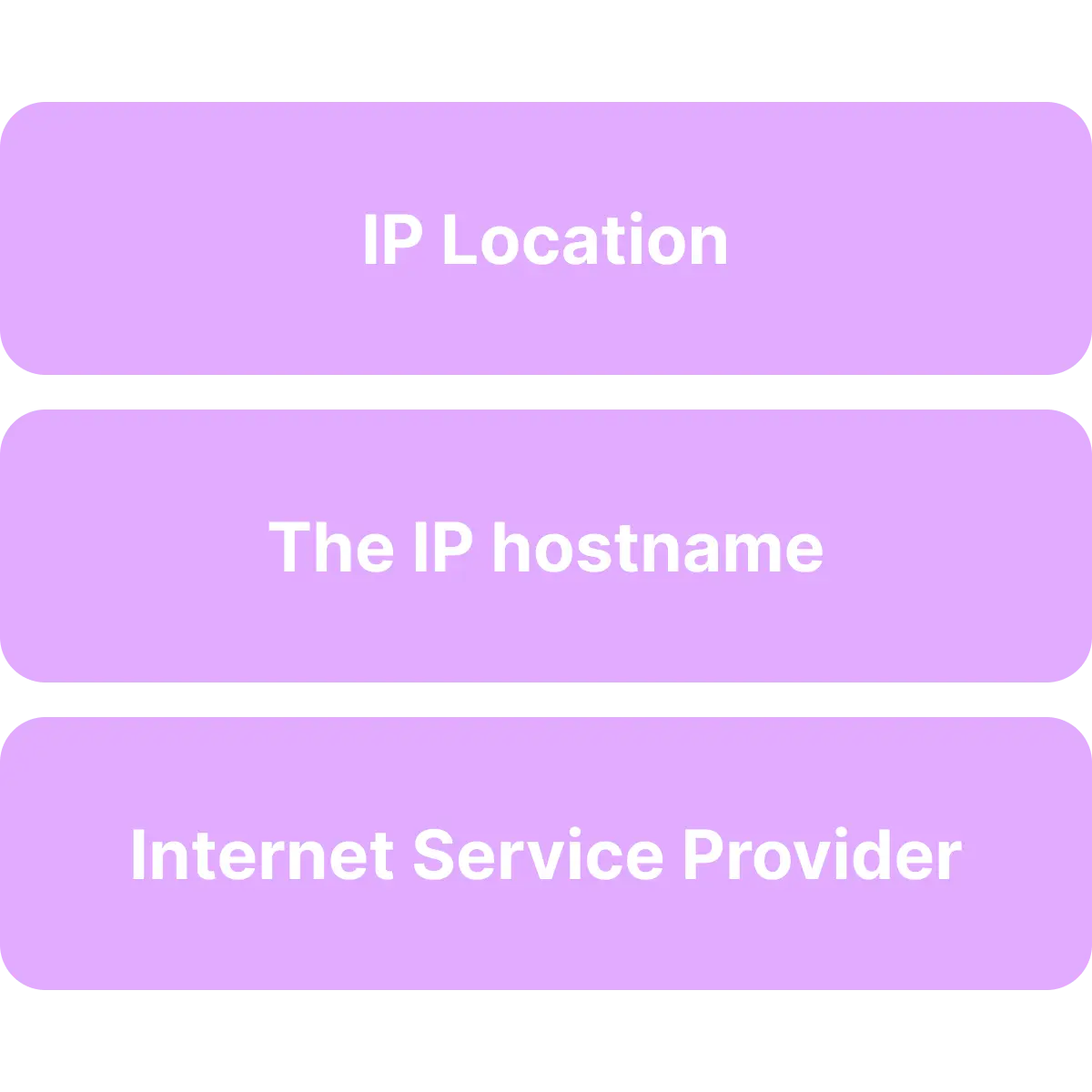
Looking up an IP address can provide a lot of information about the device and network associated with that IP address. Here's what you can find out by looking up someone's IP.
IP Lookup Tool
IP geolocation
Looking up an IP address shows you the geolocation of that IP address, including the country, state, city, and zip code.
Internet service provider (ISP)
Your public IP is given to you by your ISP (internet service provider). Looking up someone's IP address also reveals their ISP.
The IP's hostname
NordVPN's IP lookup tool also shows you the IP's hostname (its unique name on the network).
IP Lookup Tool
Looking up an IP address shows you the geolocation of that IP address, including the country, state, city, and zip code. Our tool also reveals the ISP and hostname information.

How accurate is Roundproxies's
IP lookup tool?
No IP lookup tool is 100% accurate. Like other tools, roundproxies' IP location finder looks up the IP address you enter using an IP database. While IP databases are generally accurate, they typically take time to update, so may occasionally contain discrepancies.
IP lookup results can also be influenced by factors such as proxy and VPN usage. For instance, if a user is connected to a VPN, you'll see the VPN server's IP address rather than their actual one. By connecting to a VPN server, users instantly enhance their privacy — preventing others from seeing their real approximate location or ISP information.
What can you use the IP address lookup tool for?
Verify devices on your network
If a device you don't recognize remotely joins your computer network, its IP address can be helpful in verifying this device. Looking up the device's IP address may help you understand where the device is located and help you decide if you should block it from your network for security reasons.
Check suspicious behavior
If you own a website and see suspicious traffic, looking up an IP address may provide more information and help you decide what to do next. For example, if you notice repeated failed login attempts from different IP addresses, you may use an IP lookup tool to find out more about where these attempts are coming from.
Protect yourself from scams
Checking an IP address may also help detect potential scams. For example, if you get an email from someone claiming they're your distant cousin, you can use their IP address to check their approximate location. If they say they're in the U.S., but the IP address tells a different story — you'll know it may be a scam.
IP-Lookup FAQs
Enterprise proxies that scale.
Unmatched performance.
Trusted by fast-growing teams and data professionals worldwide